

How Often Should You Descale a Coffee Maker?
Simple Schedule by Use, Water Hardness, and Warning Signs
QUICK ANSWER
Use this simple guide:
- Daily use with hard water: every 3 to 4 weeks
- Daily use with moderate water: every 4 to 6 weeks
- Moderate use: every 6 to 8 weeks
- Occasional use: every 2 to 3 months
Use Your Kettle as a Hard-Water Clue
Your kettle is the easiest visible clue.
If it scales quickly, your coffee maker is likely dealing with the same mineral-heavy water. If you can already see white mineral deposits inside it, follow our guide on how to descale a kettle. The difference is that kettle scale is easy to see. Coffee maker scale is usually hidden inside the heating area and water path.
If the kettle needs frequent descaling, choose the shorter end of the coffee maker schedule. If it stays mostly clear for months, the longer end may be enough, unless your manual says otherwise.
Always descale your kettle sooner if the machine starts brewing slowly, sounds louder than usual, produces flat-tasting coffee, or shows a descale warning.
Do not wait for the calendar if the machine already shows signs of scale.
If your machine is ready for a descale cycle, use a product suitable for your machine. Halefresh offers a citric acid-based solution for descaling a coffee machine as part of regular coffee maker maintenance.
Coffee Maker Descaling Schedule
Use this schedule as a starting point, not a fixed rule.
The best schedule depends on three things: how often you brew, how hard your water is, and whether the machine is already showing symptoms.
A coffee maker does not build scale because time passes. It builds scale because heated water leaves minerals behind. So two identical machines can need different routines. One may run twice a day with hard water. Another may run twice a week with softer water.
The calendar gives you a check-in point. The machine tells you whether to act sooner.
If the flow slows, the pump sounds louder, the coffee tastes flatter, or the descale light appears, move up the schedule. If the machine gets light use and your water is soft, you may be able to wait longer.

Daily use with hard water: every 3 to 4 weeks
Descale every 3 to 4 weeks if you use your coffee maker daily and live in a hard-water area.
This shorter schedule also makes sense if your kettle scales quickly, your machine starts sounding louder, or your coffee begins to taste flat before the month ends.
Hard water speeds up mineral buildup. So, in this case, regular descaling works better than waiting for the machine to struggle.
Daily use with moderate water: every 4 to 6 weeks
Descale every 4 to 6 weeks if you use the machine every day and your water is not especially hard.
This suits many home coffee makers.
A good habit is to check the machine once a month. If the flow still looks normal and the coffee tastes right, you may be able to wait closer to six weeks.
If the machine slows down, descale sooner.
Moderate use (several times per week): every 6 to 8 weeks
Descale every 6 to 8 weeks if you use the machine several times a week, but not every day.
This gives you a sensible maintenance rhythm without overdoing it.
At the same time, do not stretch the schedule too far if your water is hard. Light use helps, but hard water still leaves deposits behind.
Occasional use: every 2 to 3 months
Descale every 2 to 3 months if you only use the coffee maker now and then.
A machine that runs less often will usually build scale more slowly.
Still, it should not sit ignored.
Old water paths, stale residue, and small mineral deposits can still affect taste and flow over time.
Before you use a machine that has been sitting for a while, rinse it well. Then check for slow brewing, strange noise, or weak-tasting coffee.
If the machine has been sitting unused, start with cleaning a coffee maker before deciding whether it also needs descaling.
Why Descaling Frequency Changes
There is no fixed descaling schedule that suits every coffee maker.
One machine may run once each morning with soft water.
Another may run five times a day with hard water.
They will not build scale at the same rate.
Limescale forms when minerals in water build up inside the machine. Water hardness comes mainly from dissolved minerals, especially calcium and magnesium. When that water heats inside a coffee maker, those minerals can leave deposits behind.
You often see this first in a kettle.
White scale appears on the base or around the water line. A coffee maker faces the same problem, but the buildup often sits hidden inside tubes, heating areas, valves, and narrow water channels.
So, a coffee maker can look clean from the outside while scale builds inside.
That is why timing matters.

In most homes, the schedule changes because of water hardness, machine use, and visible performance changes.
Water hardness
Hard water builds scale faster.
If your kettle develops white deposits quickly, your coffee maker probably needs more frequent descaling too.
This gives you one of the easiest real-world checks because both appliances usually use the same tap water.
Machine use
Every brew cycle sends more water through the system.
So, daily use creates more scale risk than occasional use.
A single-person household that makes one pot each morning can use a lighter schedule than a busy kitchen or small office machine that runs throughout the day.
More use means more heated water passing through the machine, which gives minerals more chances to build up.
Machine performance
Your machine often gives you signs before the problem becomes obvious.
Look for changes in:
- brew speed
- water flow
- machine noise
- coffee temperature
- coffee taste
- warning lights
- visible white residue
These signs do not always prove limescale.
A dirty brew basket, old coffee oils, or a blocked filter can also affect performance.
Even so, scale should be one of the first things you check if the machine has not been descaled recently.
Signs you Should Descale Sooner
A schedule helps, but symptoms matter more.
These signs matter more than the calendar.
Descale sooner if you notice:
- slower brewing
- weaker coffee
- uneven water flow
- louder gurgling or pumping sounds
- lukewarm coffee
- a descale warning light
- white residue in the reservoir
- flat, bitter, or inconsistent taste
- water struggling to pass through the machine
These signs usually appear gradually.
The coffee tastes slightly worse. Then the brew takes a little longer. Then the machine starts making more noise.
By the time the problem feels obvious, scale may already be affecting the water path.
So act early.
It is easier to maintain a machine than rescue one that has been neglected.
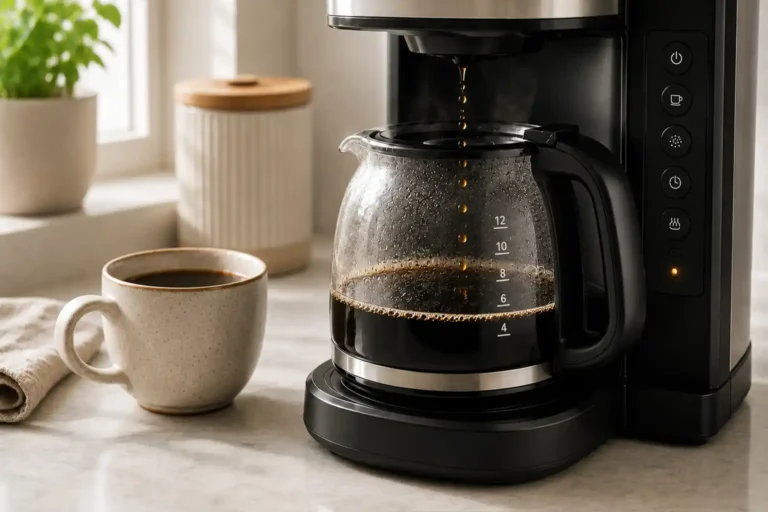
Should you Wait for the Descale Light?
A descale light is useful, but it is not the same as a direct scale sensor.
Different brands handle descale reminders in different ways. Keurig gives broad timing guidance, often around every 3 to 6 months or when the descale light appears. Nespresso commonly works from a time or capsule count, such as every 3 months or 300 capsules. Many De’Longhi bean-to-cup machines also depend on the water hardness setting entered during setup.
So the light can be useful, but it does not always tell you how much scale is inside the machine.
If the light appears on your machine, follow the full process to descale a Keurig rather than simply resetting the reminder. But if the machine slows down, sounds louder, or coffee starts tasting flat before then, descale sooner.
If the light appears too often, check your manual and review the water hardness setting before repeating another cycle.
Does Machine Type Change the Schedule?
Yes, but not in a simple “more often or less often” way.
Machine type changes how closely you should follow the manual, how quickly you should respond to warning signs, and how cautious you should be about long gaps between descale cycles.
Drip coffee makers
Drip coffee makers are usually simple, but they still build scale inside the heating area and water path.
If you use one daily, start with the 3 to 6 week range depending on water hardness.
If you use it occasionally, 2 to 3 months may be enough.
Pod coffee machines
Pod machines often use warning lights, cycle counts, or brand-specific descaling modes.
Follow the manual first.
These machines can have narrow internal pathways, so do not ignore slow flow or warning lights.
If your pod machine says it needs descaling, treat that as the priority.
Espresso and bean-to-cup machines
Espresso and bean-to-cup machines need more care.
They use pumps, valves, boilers, thermoblocks, and narrower water paths.
Many also ask you to set water hardness.
That setting affects how often the machine asks for descaling.
So, before you blame the machine for warning too often, check whether the hardness setting matches your actual water.
For these machines, always check the manual before using vinegar or a non-brand descaler.
Can you Descale Too Often?
Yes.
Descaling helps when scale is present. But it is still an acidic cleaning cycle, so it should have a purpose.
One thing we see with home coffee maintenance is that people often swing between two extremes. They either wait until the machine slows down, or they descale too often because they think more cleaning must mean better care.
Neither approach works well.
Soft water is a good example. If your water has very low calcium and magnesium, there is usually less hard scale for the descaler to break down. In that case, frequent descaling may add extra acid and rinse cycles without giving you much benefit.
So, if the water is soft, the machine is lightly used, and the coffee maker still runs normally, constant descaling is usually unnecessary.
A better routine is simple:
- Use the right product
- Use it at the right interval
- Rinse properly
- Watch how the machine performs
Regular care matters. Excessive descaling does not.
Does Filtered Water Mean you Can Descale Less Often?
Filtered water can reduce scale, but only if the filter reduces hardness minerals.
That is the part people often miss.
Some filters mainly improve taste or reduce chlorine. They may make better-tasting coffee, but they may not remove enough calcium and magnesium to stop limescale. Other systems, such as softening filters or reverse osmosis, can reduce scale much more.
So filtered water can stretch the time between descale cycles, but it does not automatically remove the need to descale.
Your kettle can help here too.
If your kettle still builds white scale, your coffee maker can still build scale. In that case, keep descaling on a schedule. If the kettle stays mostly clear and the machine runs normally, you may be able to use the longer end of the schedule.
Still follow your machine manual first, especially for pod, espresso, and bean-to-cup machines.
What Happens if you Do Not Descale Often Enough?
Do not descale by date alone.
Use the schedule as a guide, then pay attention to the machine.
If your water is hard, the machine runs every day, or brewing starts to slow down, descale sooner.
If your water is softer and the machine only gets light use, you can usually wait longer.
The goal is not constant cleaning. The goal is to descale before scale turns a simple maintenance cycle into a harder job.
What Should you use When it is Time to Descale?
Once the schedule is clear, the next question is what to use.
The market is broader than vinegar versus descaling solution. You will see vinegar, citric acid powder, descaling tablets, manufacturer-recommended products, liquid descalers, and mixed-acid formulas.
Vinegar can work in some simple drip coffee makers, but it needs thorough rinsing and may not suit every machine. Before using it, read our guide to descaling coffee maker with vinegar.
The right choice depends on your machine, your manual, and how much control you want over the process.
Powders and tablets can work well too, but they need correct mixing, dissolving, and dosing.
Manufacturer-recommended descalers are often the safest choice for warranty-sensitive machines because they follow the brand’s own guidance.
For regular maintenance, a coffee maker descaling solution can make the schedule easier to follow, especially if you descale every month or two.
If you want to compare the options in more detail, read our guide to the best coffee machine descaler.

Set the Schedule, Then Watch the Machine
Do not descale by date alone.
Use the schedule as a guide, then pay attention to the machine.
If the water is hard, the machine runs every day, or the brew starts slowing down, move sooner. If the water is softer and the machine only gets light use, you can usually wait longer.
The point is not to clean constantly.
It is to descale before scale turns a simple maintenance cycle into a harder job.
Frequently Asked Questions
How often should you descale a coffee maker?
Most coffee makers need descaling every 3 to 8 weeks with regular use. Daily use with hard water may need descaling every 3 to 4 weeks. Occasional use may only need descaling every 2 to 3 months.
How do I know if my coffee maker needs descaling sooner?
Descale sooner if brewing slows down, the pump sounds louder, the coffee tastes flat, the water flow becomes uneven, or a descale warning appears. These signs matter more than the date on the calendar.
How often should you descale a coffee maker with hard water?
Descale every 3 to 4 weeks if you use the machine daily with hard water. Hard water leaves mineral deposits faster, so waiting too long can affect flow, taste, and machine performance.
Should I descale my coffee maker every month?
Monthly descaling makes sense if you use the machine every day or live in a hard-water area. If you use the machine less often or have softer water, every 6 to 8 weeks or 2 to 3 months may be enough.
Should I wait until the descale light comes on?
You can, but you should still watch how the machine performs. If brewing slows down, the machine sounds louder, or coffee tastes flat before the descale light appears, descale sooner.
Does vinegar change how often I need to descale?
No. Vinegar changes the method, not the schedule. The schedule still depends on water hardness, use, and machine behavior. If you are considering vinegar, read our guide on how to descale a coffee maker with vinegar.
Does filtered water stop limescale?
Not always. Some filters improve taste but do not remove enough hardness minerals to stop scale. If you still see white deposits in your kettle or water tank, keep descaling your coffee maker.
What happens if I do not descale my coffee maker?
Scale can restrict water flow, reduce heat transfer, slow brewing, and affect coffee taste. Over time, the machine may work harder than it should.

