

How to Descale a Coffee Maker with Vinegar
QUICK ANSWER
Descale a Coffee Maker with Vinegar
- Mix equal parts white vinegar and water.
- Fill the water reservoir.
- Start a brew cycle.
- Pause halfway for 15 to 30 minutes.
- Restart and complete the cycle.
- Run 2 to 3 clean water cycles to rinse.
- Stop rinsing only when the vinegar smell is gone.
Always check your coffee maker manual first. Some machines should not be descaled with vinegar.
Descaling a Coffee Maker with Vinegar
If you want to know how to descale a coffee maker with vinegar, the basic method is simple: dilute the vinegar, run it through the water system, pause for contact time, then rinse thoroughly. Yes, vinegar can work, but only if your machine allows it and you rinse it properly.
White vinegar contains acetic acid, which helps break down limescale and mineral deposits inside the water system. That is why many people use it when their coffee maker starts brewing slowly, makes more noise, or producing flat-tasting coffee.
Vinegar strength can vary, which is one reason household vinegar gives less predictable results than a controlled descaling product.
Vinegar is not always the best answer.
It can leave a strong smell. It often needs extra rinsing. Some coffee machine manufacturers recommend dedicated descaling products instead.
This guide explains when vinegar works, when it causes problems, and when a purpose-made descaler is the safer long-term choice.
If you need the full process from start to finish, see our how to descale a coffee maker guide.
For regular maintenance, a purpose-made coffee maker descaler gives you a more controlled option than vinegar, especially if you descale on a routine schedule.
How Vinegar Removes Limescale from a Coffee Maker
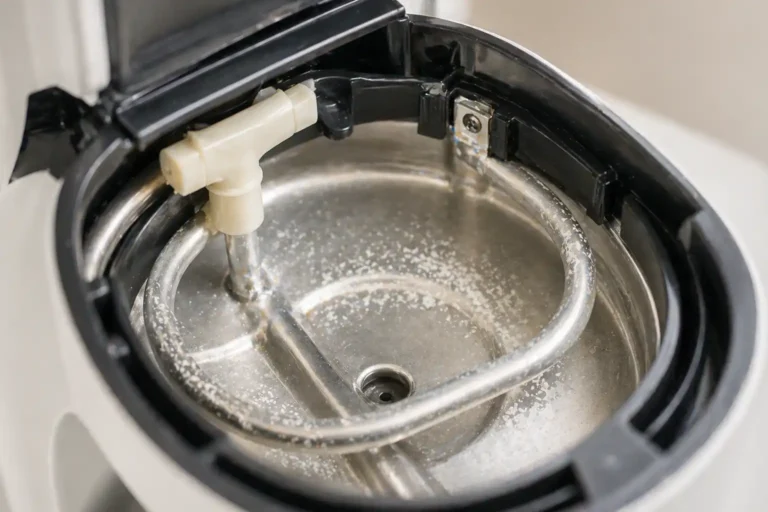
Limescale forms when minerals in water build up inside your coffee maker.
The problem usually starts in hot, narrow parts of the system, such as heating elements, tubing, valves and restricted flow points.
Vinegar helps because acid reacts with calcium carbonate and other mineral deposits. It loosens some of the scale so water can flush it out of the machine.
That sounds simple. The practical problem is control.
Household vinegar was not made specifically for coffee machines. People use different strengths, different ratios, different cycle times, and different rinse methods.
This is where results begin to vary.
Vinegar works best when the scale is light and the machine is simple.
What Ratio Should you use to Descale a Coffee Maker with Vinegar?
For most basic drip coffee makers, a common starting point is:
1 part white vinegar to 1 part water. That means equal amounts of vinegar and water.
For example:
4 cups vinegar + 4 cups water
6 cups vinegar + 6 cups water
500 ml vinegar + 500 ml water
Always check your machine manual before using vinegar. Some manufacturers recommend dedicated descaling products instead, and using vinegar against the manual may affect warranty coverage.
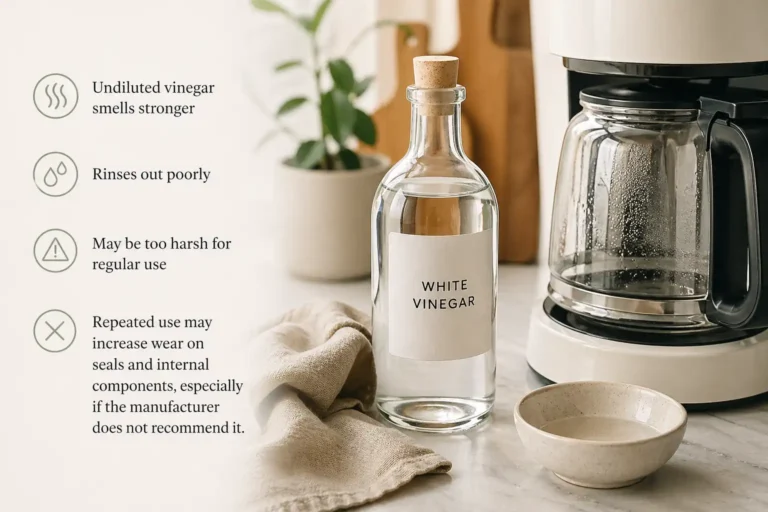
Do not use undiluted vinegar unless your manual specifically tells you to.
Straight vinegar smells stronger, rinses out less cleanly, and can damage the machine’s components.
How Much Vinegar Should you use to Clean a 12 Cup Coffee Maker?
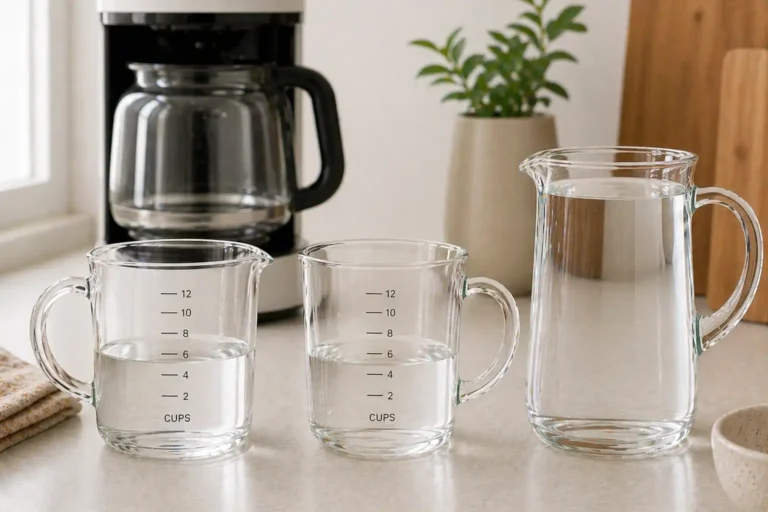
For a standard 12 cup coffee maker, go with a half-and-half mix:
- 6 cups of white vinegar
- 6 cups of water
Fill the reservoir to its normal maximum level.
For a full step-by-step method, including timing and rinse cycles, follow our step-by-step descaling guide.
Run a full brew cycle so the solution moves through the heating element and internal water lines where scale forms.
After the vinegar cycle, rinse the machine with clean water. Expect to run 2 to 3 full rinse cycles, especially if any vinegar smell remains.
If you can still smell vinegar, keep rinsing. If your next coffee tastes sharp or smells of vinegar, the machine needs another rinse cycle.
If you are using vinegar for surface cleaning rather than internal descaling, read our guide on how to clean a coffee maker with vinegar.
Should you Pause the Coffee Maker During Vinegar Descaling?
Yes. Pausing the cycle increases contact time inside the system. This matters because limescale does not always dissolve as the solution passes through.
A short pause allows the solution to sit in:
- Heating areas
- Bends
- Narrow channels
- Restricted points
The practical method is:
- Start the brew cycle
- Let some solution run through
- Pause the machine halfway
- Wait 15 to 30 minutes
- Restart and complete the cycle
A short pause is usually enough. Descaling works best when the solution moves through the system, rather than sitting in one place.
Pros of using Vinegar to Descale a Coffee Maker
Vinegar has some clear advantages.
For light buildup in a simple drip coffee maker, it can be a useful short-term option.
It is easy to find
Most people already have white vinegar at home.
That makes it useful when your machine suddenly slows down and you need a quick household option.
It is cheap
Vinegar usually costs less than a dedicated descaling product.
For light scale, it may improve flow enough to get the machine working again.
It can work on mild buildup
If limescale has only started to form, vinegar can help loosen it.
This is where it tends to work best.
It is not useless. It is just less controlled.
Cons of using Vinegar to Descale a Coffee Maker
The downsides are not always obvious until after the cycle.
It can leave a strong smell
Vinegar smell can linger in the reservoir, carafe, tubing, and plastic parts if the machine is not rinsed properly.
It will carry into the next few brews.
Some manufacturers advise against vinegar
Manufacturer advice varies.
Some brands allow vinegar for certain machines. Others recommend specific descalers, and some manufacturers warn against vinegar.
That does not mean vinegar destroys every coffee maker.
Learning how to descale a coffee maker with vinegar is mostly about dilution, contact time, and rinsing. Most problems come from getting one of those steps wrong.
It means you should not assume it suits every machine.
Common Mistakes when using Vinegar
Most vinegar problems come from poor method.
Using vinegar undiluted
Straight vinegar can smell stronger and rinse out poorly. Use a diluted mix unless your manual says otherwise.
Rushing the cycle
If the solution passes through too quickly, it may not spend enough time on the scale.
A short pause is recommended.
Not rinsing enough
One rinse cycle won’t do the job.
Run clean water through the machine until the smell disappears and the water runs clear.
Waiting until the machine is badly scaled
Vinegar works best on light or moderate buildup.
If the machine already brews very slowly, gurgles heavily, or struggles to move water, one vinegar cycle probably won’t solve the problem.
Ignoring the manual
Always check your machine manual before using vinegar. If the manufacturer advises against it, use a recommended descaling product instead.
Never mix vinegar, citric acid, or any descaling solution with bleach or other cleaning chemicals.
Why Vinegar can be Inconsistent
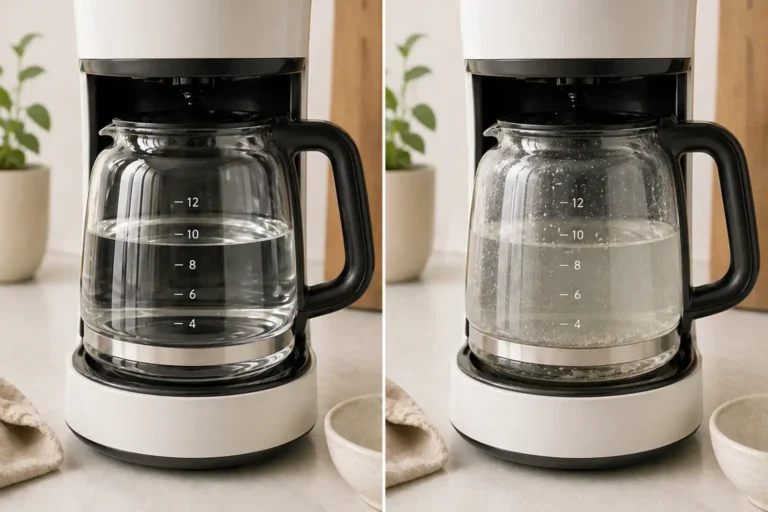
Vinegar is a household product, not a controlled coffee machine descaler. A purpose-made descaling solution uses a controlled formulation.
Vinegar depends on:
- Vinegar strength
- Dilution ratio
- Pause time
- Amount of scale
- Machine design
- Rinse process
Results can differ from one machine to another.
This is why vinegar works better as an occasional household fix than a reliable maintenance method.
When Vinegar Works Well
Vinegar works best when:
- The machine is a basic drip coffee maker
- The scale buildup is light
- The manual allows vinegar
- You dilute it properly
- You rinse thoroughly
- You need a quick short-term option
It can also help you confirm whether limescale is causing the problem.
If you are deciding when to descale rather than what to descale with, read our full guide: how often should you descale a coffee maker.
If brewing improves after a vinegar cycle, scale was the likely issue.
When Vinegar Should be Avoided
Vinegar should be avoided when:
- Your manual warns against it
- Your machine uses pumps, capsules, pressure systems or integrated grinders
- Your machine is under warranty and the manual specifies a branded descaler
- The scale buildup is heavy
- You have already tried vinegar and the problem came back
- You cannot rinse the machine fully afterwards
Be especially careful with espresso machines, capsule machines, and bean-to-cup machines, where pumps, seals, sensors, and internal descaling programmes may require a specific product.
Can Vinegar Damage a Coffee Maker?
Occasional diluted vinegar is unlikely to damage a basic drip coffee maker if the manufacturer allows it and you rinse properly.
The risk increases when you:
- Use the vinegar straight
- Leave it sitting too long
- Use it too often
- Use it against manufacturer advice
- Fail to rinse the machine properly
The main concern is repeated exposure.
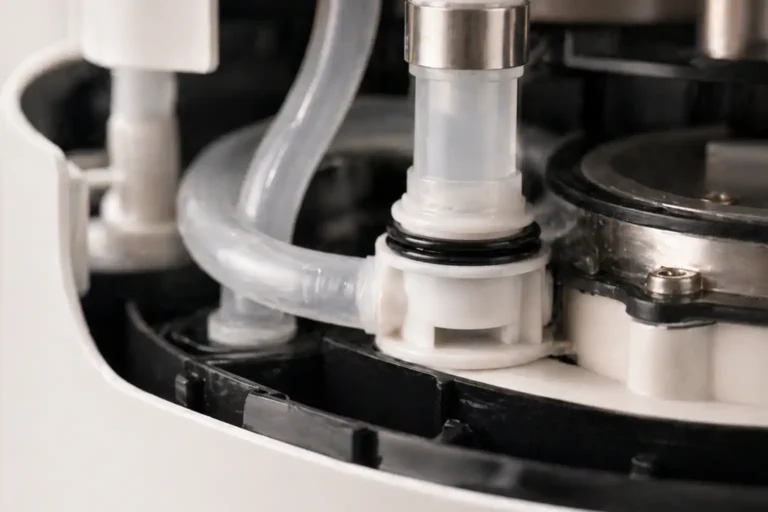
Repeated vinegar use may affect seals, gaskets, plastics, or internal parts in machines that were not designed for vinegar descaling.
So vinegar should not be your automatic answer for every machine.
Vinegar vs Descaling Solution
Vinegar and descaling solutions can both remove limescale.
The difference is control.
Vinegar is cheap and easy to find, but it requires more care to use well.
A purpose-made descaling solution gives you a more controlled strength and a cleaner process. It removes the guesswork from mixing, timing, and repeat use.
| OPTION | BEST FOR | MAIN DRAWBACK |
|---|---|---|
| VINEGAR | Light buildup and quick household use | Smell, rinsing, and inconsistent strength |
| CITRIC ACID | DIY descaling with less smell than vinegar | Still needs measuring and mixing |
| PURPOSE MADE – DESCALER | Routine maintenance and consistent results | Costs more than household vinegar |
Vinegar can work, but if you want a repeatable method, a purpose-made descaler is the better long-term choice.
If you want a fuller comparison of descaler types, see our guide to the best coffee machine descaler
When Vinegar is Enough, and When it is Not
Vinegar can work for light limescale in a basic drip coffee maker.
But it is not the right answer for every machine.
If the machine has sensitive parts, heavy scale, brand guidance against vinegar, or a warning system that expects a specific descale cycle, use a purpose-made descaling solution instead.
The practical rule is simple:
Use vinegar only when the machine allows it, the buildup is light, and you are prepared to rinse thoroughly.
For routine maintenance, a controlled descaler is usually the cleaner long-term choice.
Frequently Asked Questions
How do you descale a coffee maker with vinegar?
Here is how to descale a coffee maker with vinegar: mix equal parts white vinegar and water, fill the reservoir, run part of a brew cycle, pause for 15 to 30 minutes, then complete the cycle.
Can you descale a coffee maker with vinegar?
Yes. White vinegar can help remove limescale when you dilute it with water and run it through the machine. Rinse thoroughly afterwards to remove smell and residue.
What is the best vinegar ratio for descaling a coffee maker?
A common ratio is 1 part white vinegar to 1 part water. Some manufacturers recommend weaker mixes, so always check your machine manual first.
How much vinegar should I use to clean a 12 cup coffee maker?
For a standard 12 cup coffee maker, use around 6 cups of white vinegar and 6 cups of water, or fill the reservoir with a 1:1 mixture. Rinse with clean water 2 to 3 times afterwards.
Can I use straight vinegar to clean my coffee maker?
Undiluted vinegar smells stronger, rinses out poorly, and may be too harsh for regular use. Repeated use may increase wear on seals and internal components, especially if the manufacturer does not recommend it.
Is vinegar better than descaling solution?
Vinegar is cheaper and easy to find. A purpose-made descaling solution gives more controlled and consistent results, especially for regular maintenance.
Can vinegar damage a coffee maker?
Vinegar is unlikely to damage a simple drip coffee maker if it is used occasionally, diluted properly, rinsed thoroughly, and allowed by the manufacturer.

