

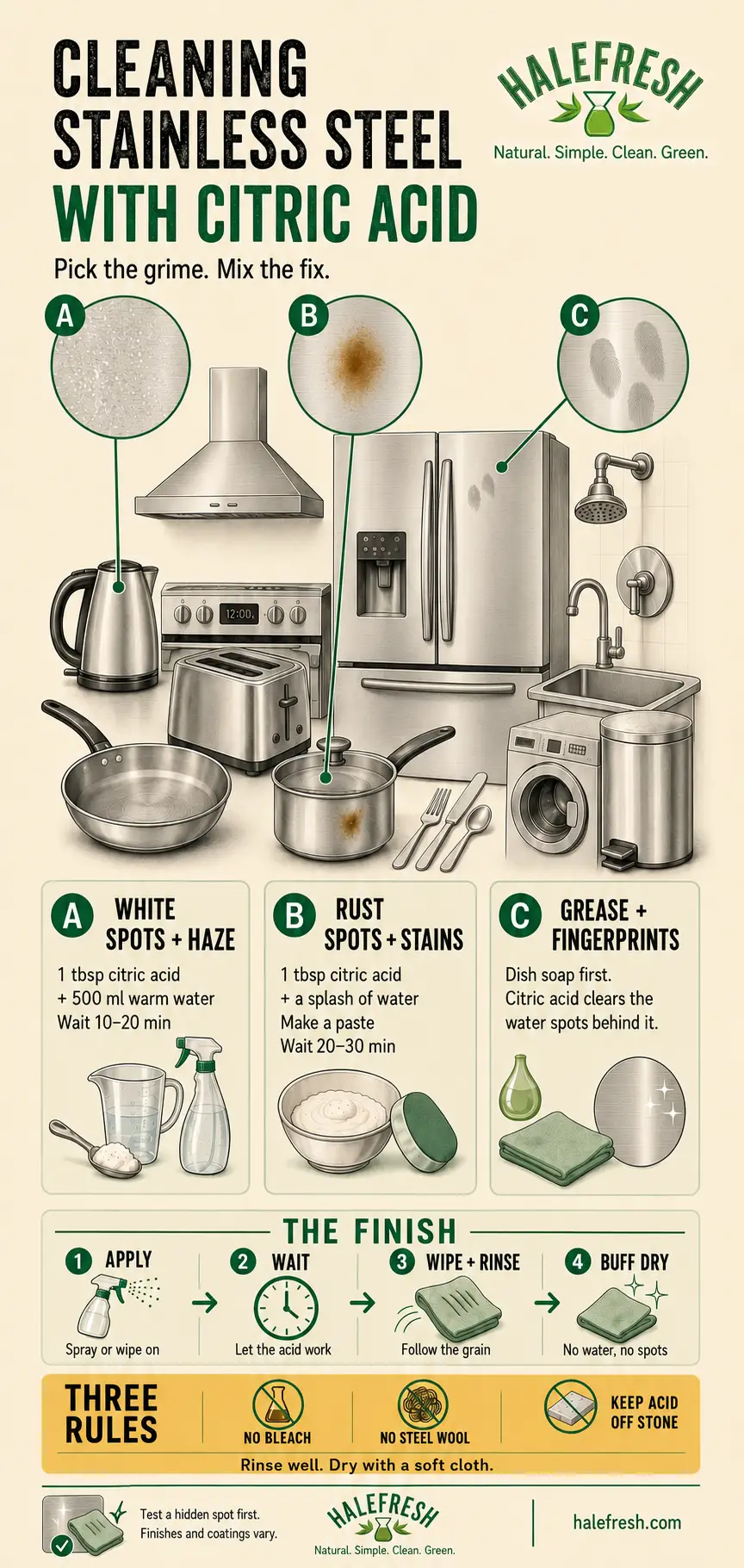
Stainless steel gathers three kinds of grime, and citric acid beats two of them outright:
Here’s something most cleaning guides never tell you, and it’s the best fact in this whole article: industry doesn’t just clean stainless steel with citric acid. It uses citric acid to make stainless steel more stainless.
Stainless steel stays rust-free because a thin skin of chromium oxide covers the surface. Scratch that skin, or leave stray iron sitting on it, and rust gets a foothold. So manufacturers bathe finished steel parts in citric acid. The acid pulls out the free iron and lets the chromium skin heal thicker. The process even has a name, citric acid passivation, and its own standard, ASTM A967. Aerospace shops use it. Medical device makers use it.
So when you wipe your sink with citric acid, you’re not risking the steel. You’re giving it the same treatment the people who built it would give it. Try saying that about bleach.
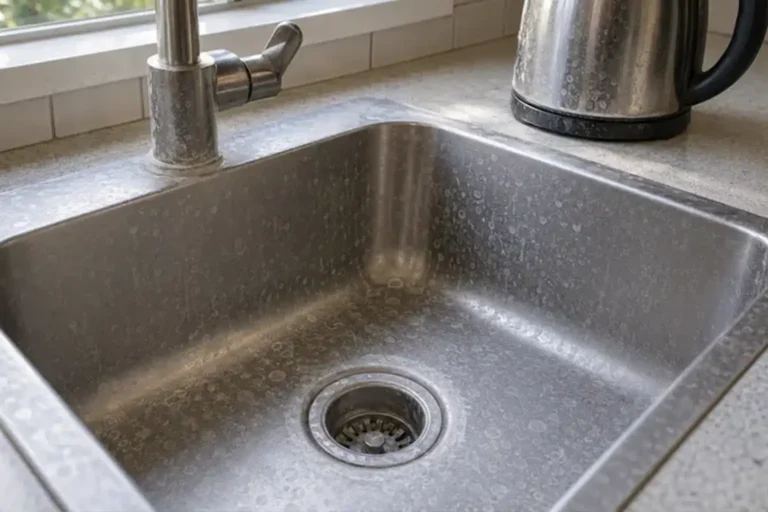
The cleaning side is simpler chemistry. Your tap water carries dissolved calcium and magnesium. When the water dries on steel, the minerals stay behind as white spots and chalky film. Those minerals are alkaline. Citric acid dissolves them and carries them off in the rinse. It grabs iron stains the same way — the acid latches onto the metal in the stain and lifts it free.
| Use | Citric Acid Mix | Contact Time |
|---|---|---|
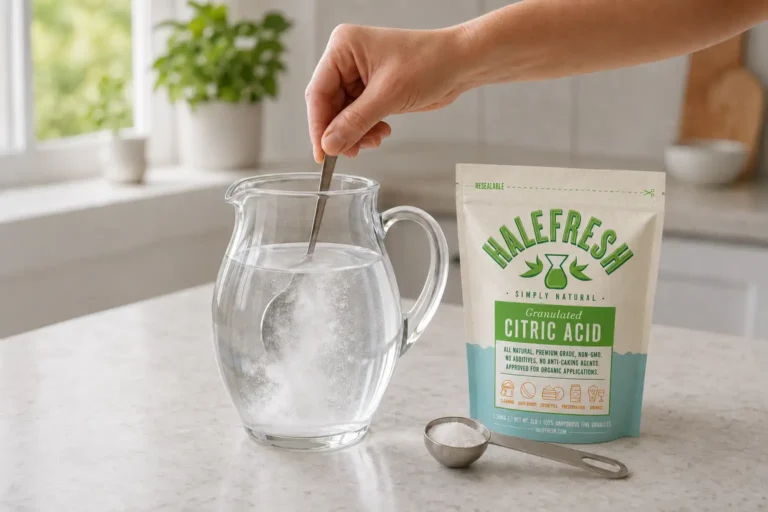
| Everyday cleaning: Water spots, haze and light film | 1 tablespoon citric acid mixed with 500 ml (2 cups) warm water | Wipe on and leave for 5–10 minutes |
| Heavy limescale: Sinks and draining boards | 2 tablespoons per 500 ml warm water, or cover the area with a cloth soaked in the solution | Leave for 20–30 minutes |
| Rust spots and stains | Make a paste using 1 tablespoon citric acid and a small splash of water | Leave for 20–30 minutes |
| Kettles and coffee machines | 1 tablespoon citric acid per 500 ml hot water | Leave for 20–30 minutes |
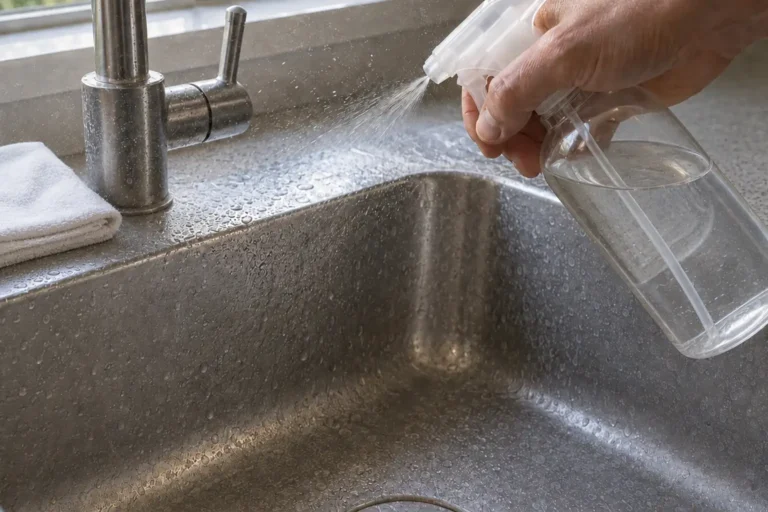
Keep the everyday mix in a spray bottle and you own a citric acid stainless steel cleaner that costs pennies a fill. Mix what you’ll use within a week or two.
The powder keeps for years in its pouch; the solution prefers to be fresh.
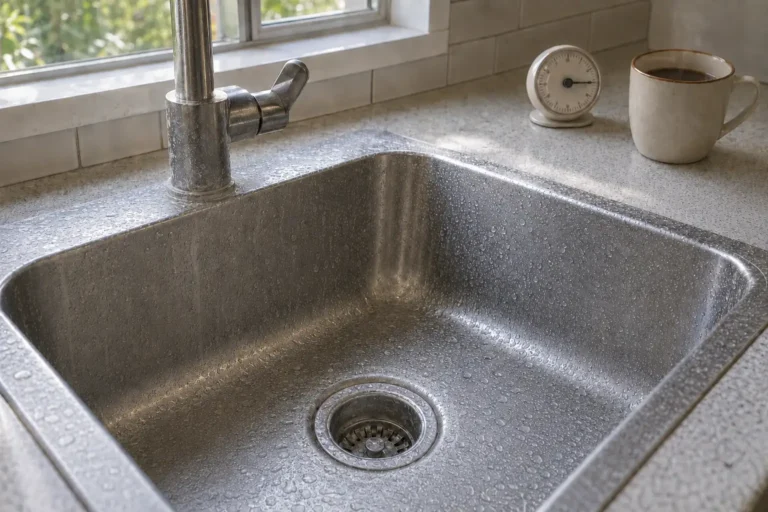
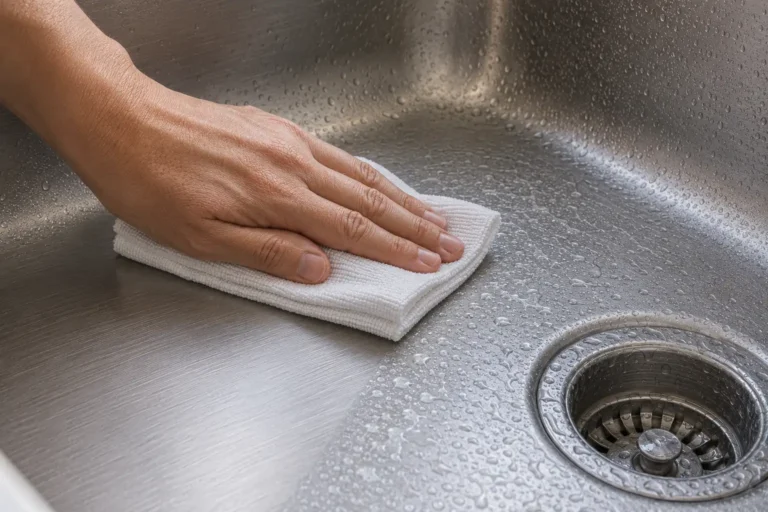
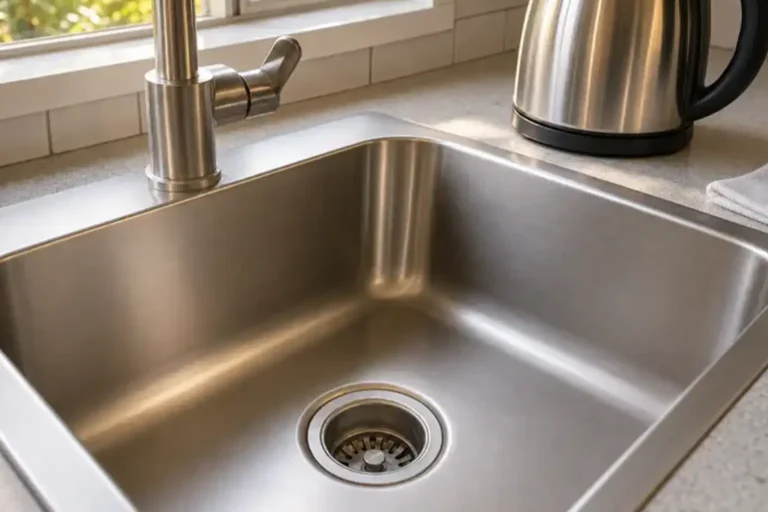
The sink takes the worst of it; water sits in it all day and dries where it lands. Spray the citric acid mix over the whole basin, give the tap and drain a soaked-cloth wrap (scale loves to hide around the drain ring), wait 20 minutes, wipe with the grain, rinse, dry. A dry sink at bedtime stays clean twice as long. One flick of a towel.
Two problems, one fix.
Fingerprints and cooking film are grease, so soap goes first: warm water, one drop of dish soap, soft cloth. Then wipe over with the citric acid spray to clear the water spots and haze the soap leaves behind, rinse-wipe, and buff dry with the grain. Steel that gets this twice a month never looks tired.
Citric acid is the classic kettle cure — boil, dose, wait, rinse. We wrote the full playbook on how to descale a kettle, and the outside-and-stains story in how to clean a tea kettle.
The benefits of purpose-made descaling solution:
Their boilers, pumps and pipes are stainless and copper you can’t reach with a cloth — which is exactly why descaling exists. Citric acid does the same job in there that it does on your sink, just out of sight. Step-by-step lives in how to descale a coffee maker, and if you’re weighing your options, here’s vinegar vs descaling solution, honestly told.
Fair’s fair. Three things sit outside its reach:
Grease. Acid and oil ignore each other. Dish soap first, always.
Scratches. Once the polish is cut, no chemical fills it. Prevention is the game, which is why steel wool never touches stainless (see below).
Deep rust pitting. If rust has eaten holes into the steel, usually from bleach or long salt contact, citric acid will clean the stain but can’t rebuild the metal. Surface rust spots, though? Those it eats for breakfast.
No bleach on stainless steel. Ever. Chlorine attacks the chromium skin that keeps the steel stainless; bleach is one of the few household chemicals that genuinely rusts it. Worse, bleach meeting leftover acid makes chlorine gas. Different cleaning days, thorough rinses between.
No steel wool, no scouring powder. Scratches give the next round of grime a home, and steel wool leaves behind iron flecks that bloom into rust spots. Soft cloths and non-scratch sponges only.
Keep the acid off natural stone. Citric acid etches marble and can dull granite. Sink first, counters wiped clear after.
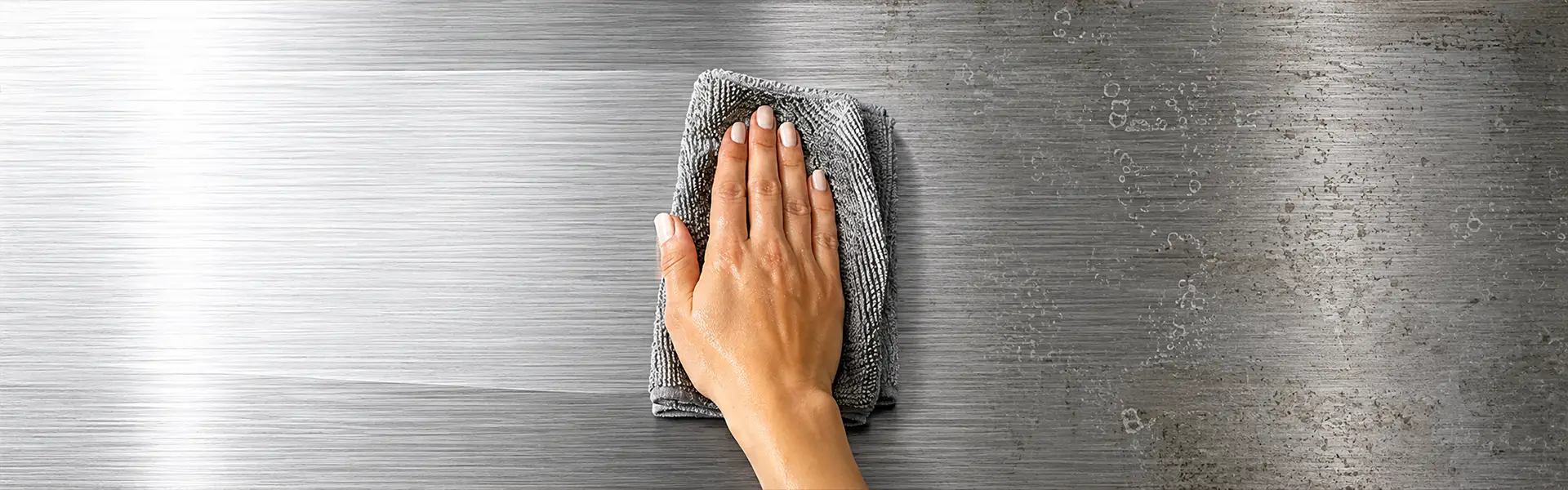
Wipe with the grain. Look closely and you’ll see fine brushed lines in the steel. Follow them and every wipe polishes; fight them and every wipe dulls.
No — and it’s one of the few cleaners you can say that about with a straight face. Industry bathes stainless steel in citric acid on purpose to strengthen its protective layer. Normal soaks of 20 minutes to an hour are entirely safe. Just rinse and dry when you’re done.
Both work; citric acid works harder. It’s a stronger scale-fighter ounce for ounce, it smells of nothing, and it rinses clean without the chip-shop haze. Vinegar earns its place when it’s what’s in the cupboard. The full comparison: vinegar vs descaling solution.
Halefresh citric acid is food grade, the same stuff that makes sour sweets sour. Rinse your pans as you would after washing-up liquid and get on with dinner.
You can, on a small spot. But lemon juice is roughly 5% citric acid plus sugar and pulp, so you pay more for a weaker acid and a sticky rinse. The powder gives you strength you can measure.
Almost never. Most “rust” on stainless is a stain from something else, a wet tin left in the sink, steel wool flecks, iron in the water. The citric acid paste lifts it. If a spot survives and feels rough or pitted, the steel itself is damaged, and that’s usually a bleach story.
Same chemistry, hidden plumbing. Follow how to descale a coffee maker the acid cleans the boiler and pipes you’ll never see, and the coffee tells you it worked.

