
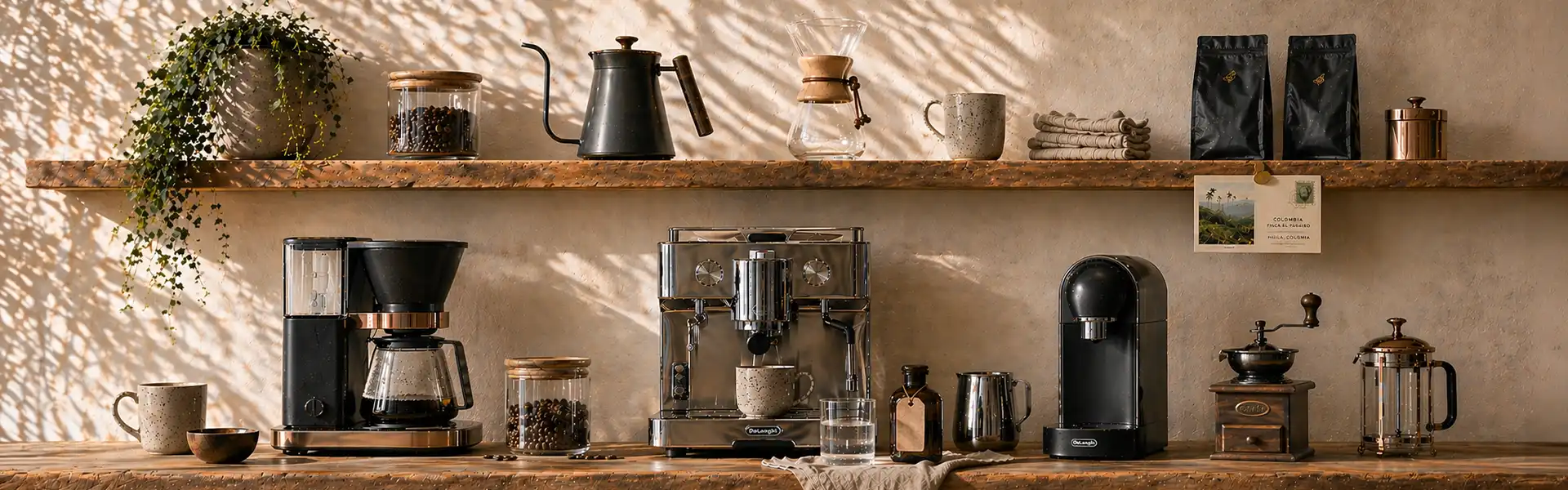
BEST COFFEE MACHINE DESCALER
What to Choose and What to Avoid
QUICK ANSWER
Best descaler for coffee machines
Best coffee machine descaler: For most home coffee pots and drip coffee makers, a citric acid-based liquid descaler is usually the best practical choice.
- Drip coffee makers: Use a citric acid-based liquid descaler.
- Pod machines: Use a lactic acid-based descaler where possible.
- Espresso machines: Use an espresso-suitable liquid descaler. Avoid vinegar and strong DIY acid mixes.
- Bean-to-cup machines: Use a liquid descaler made for automatic coffee machines. A citric acid-based or lactic acid-based formula is usually the safest practical choice.
- The right descaler depends on machine type, water hardness, and material compatibility, not acid strength alone.
If you already have descaler and need the step-by-step process, see our guide on how to descale a coffee maker.
What Makes a Good Coffee Machine Descaler?
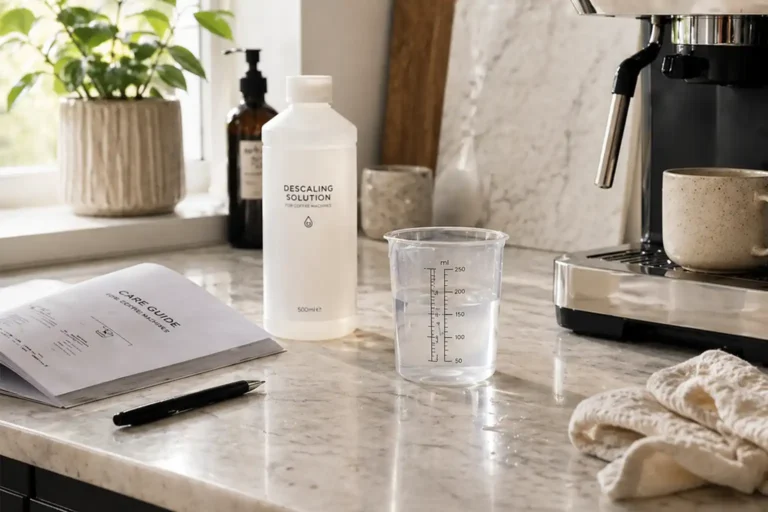
A good coffee machine descaler has to do one job well. It must break down limescale inside the machine without creating new problems. The best choice for any coffee machine is one that removes scale without leaving odour, grit, or taste behind.
Limescale forms when minerals in water collect on heated surfaces and inside narrow water paths. In a coffee machine, that can affect heating elements, tubing, pumps, flow rate, brew temperature, and taste.
A good coffee machine descaler needs enough acidity to dissolve mineral deposits. It also needs the right concentration. In practice, this matters more than the acid name on the label.
Too weak, and it may leave scale behind. Too strong, and it may put unnecessary stress on metal surfaces, rubber seals, silicone tubing, or aluminium parts.
Residue matters too.
A coffee machine handles hot water that you later drink. So the descaler should rinse away cleanly and avoid leaving a strong smell or taste. This is one reason vinegar often feels less suitable for regular use, even though it can remove some mineral build-up.
From a maintenance point of view, repeatability matters. You want the same strength each time, the same rinse process, and the same result after every descale. That is much harder when you are guessing with vinegar or mixing powder by eye.
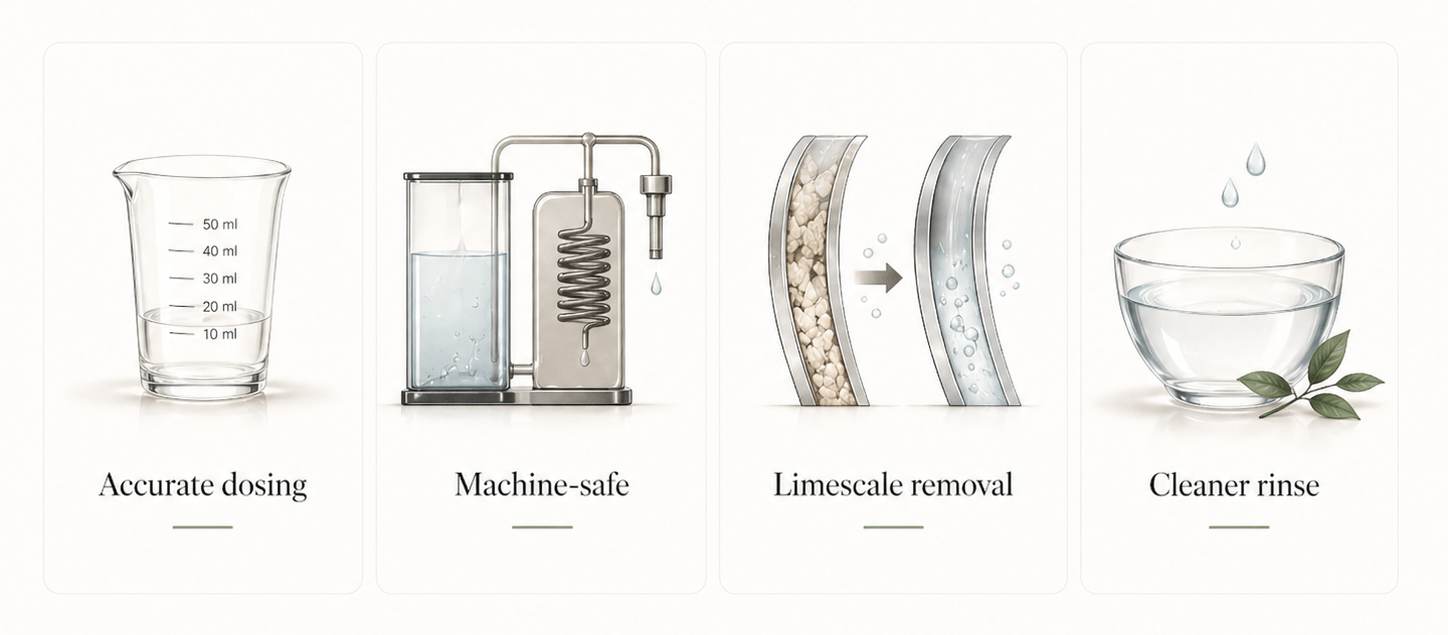
The best descaling solution for coffee machines gives you four things:
- Predictable dilution
- Low odour
- Effective limescale removal
- Suitability for internal machine parts
That combination matters more than raw strength.
Vinegar vs Descaling Solutions
Vinegar can remove some limescale, but it has limits. It smells strong due to its acetic acid. It can leave taste behind. It also gives you less consistency because household vinegar varies by type and strength.
A purpose-made descaling solution gives a cleaner, more predictable result. It exists because coffee machines are not just open kettles. They often contain tubing, seals, valves, pumps, boilers, thermoblocks, and sensors.
That does not mean vinegar never works. It means vinegar is not the best default choice for every machine.
For a deeper comparison, read our guide: descale coffee maker with vinegar
Types of Coffee Machine Descaler
Citric acid-based
Citric acid is a common choice for routine coffee maker maintenance because it works well on mineral scale and does not carry the strong smell of vinegar. For a ready-to-use option, Halefresh offers a citric acid-based coffee machine descaler.
Citric acid-based descalers work well in:
- Drip coffee makers
- Kettles
- Many single-serve machines
- Espresso machines where the machine instructions allow them
Citric acid does two useful jobs during descaling.
First, it breaks down mineral scale on heated surfaces and inside simple water paths.
Second, it helps hold calcium in solution, so loosened mineral deposits are easier to rinse away.
That makes citric acid useful where scale collects around:
- Heating elements
- Tanks
- Outlets
- Spray heads
- Internal channels
We see the real difference in how people use it.
Vinegar gets treated casually. People guess the ratio, run half a cycle, stop when the smell gets annoying, then wonder why the machine still tastes odd or flows poorly.
Citric acid gives you a cleaner route.
It removes normal limescale without the sharp vinegar smell. It also gives better control when supplied as a ready-made liquid or measured powder.
That control matters more than people think.
A poor descaling process usually comes down to one of three problems:
- The descaler is too weak
- The contact time is too short
- The appliance is not rinsed properly afterwards
The aim is not to make the harshest acid mix possible.
The aim is to use the right dose, give it enough contact time, and rinse the appliance properly afterwards.
This is where citric acid makes most sense: routine home descaling where the user needs a reliable result without vinegar smell or guesswork.
Citric acid is a strong choice for many home users because it balances performance, smell, cost, and usability. For a ready-to-use option, Halefresh offers a citric acid-based solution designed for routine coffee maker maintenance.
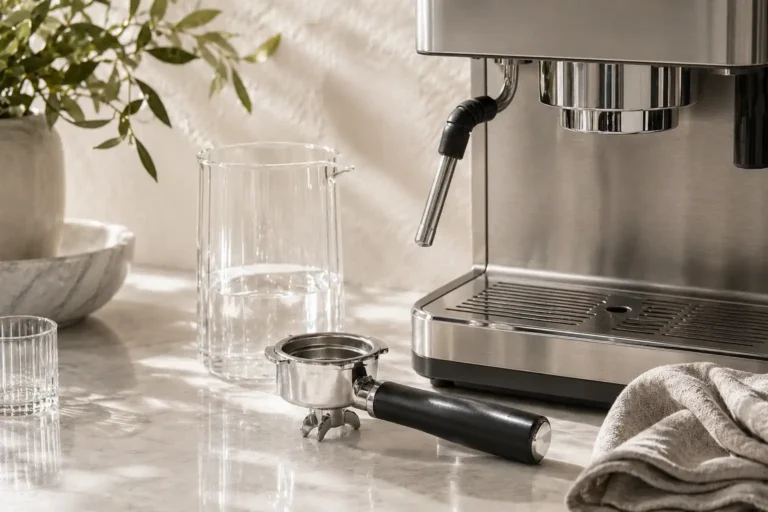
Lactic acid-based
Lactic acid is widely used in branded descalers for:
- Pod machines
- Domestic espresso machines
- Bean-to-cup machines
The reason is how it deals with limescale.
Most limescale inside these machines is calcium carbonate. Lactic acid reacts with calcium carbonate and converts much of it into calcium lactate, along with water and carbon dioxide.
That matters because calcium carbonate is practically insoluble in water, while calcium lactate is far more water-soluble.
The scale does not just loosen from the surface.
Much of it changes into a more soluble calcium salt that the machine can rinse through.
That matters in machines with:
- Narrow pipes
- Pumps
- Valves
- Thermoblocks
- Heated internal parts
This is why we do not judge a descaler by how aggressive it sounds.
The best product is not always the strongest acid.
For pod machines, domestic espresso machines, and bean-to-cup machines, the better test is this:
Will it turn hard scale into something the machine can carry away cleanly?
That is where lactic acid earns its place.
Commercially blended coffee machine descalers
Commercial blended descalers are not automatically better because they contain more ingredients.
A good formula controls how the descaler behaves inside the appliance.
That can include:
- Acid strength
- Contact time
- Rinse behaviour
- Odour
- Material suitability
- Storage stability
Some blends use several acids, stabilisers, surfactants, or corrosion-control ingredients. Others keep the formula simple, using a controlled concentration of citric acid in purified water.
Do not judge the product by the length of the ingredient list.
Judge it by how clearly it tells you what it is for and how predictably it works.
A simple citric acid formula can be the better everyday choice for home descaling because it has fewer variables. It is easy to understand, easy to dose, and easy to rinse when used correctly.
A more complex commercial blend may make sense for heavier scale, professional servicing, or machines that need a manufacturer-specific descaling process.
The problem is transparency.
Some products clearly state their intended appliance types, usage limits, dosage, and rinse instructions. Others hide behind phrases like “powerful formula”, “machine safe”, or “professional strength” without explaining what that means.
A useful descaler should tell you:
- What appliance type it is made for
- How much product to use
- How long to leave it in contact
- How to rinse the system afterwards
- Whether there are any material or machine restrictions
That matters more than how complicated the formula sounds.
Quick comparison
| GOOD FIT FOR | MAIN RISK | OUR ADVICE | |
|---|---|---|---|
| CITRIC ACID | Drip coffee makers, kettles, and many simple home machines | Wrong dilution or short contact time | Best general-purpose choice when the dilution is controlled |
| LACTIC ACID | Pod machines and some bean-to-cup or espresso machines | Brand-specific guidance and higher cost | Strong option when the machine guidance supports it |
| READY-TO-USE liquid descaler | Routine home maintenance with no mixing | Vague labels with little machine guidance | Best choice for consistency and less guesswork |
| VINEGAR | Simple drip machines with light scale | Smell, taste residue, inconsistent strength | Occasional fallback, not the best routine choice |
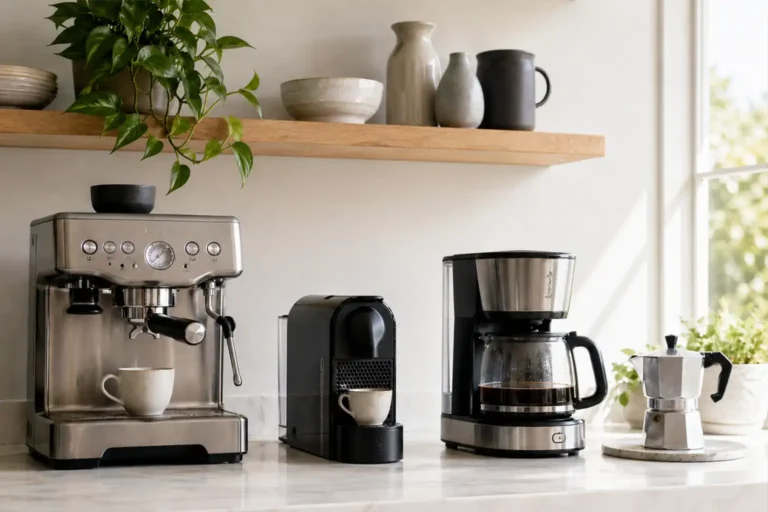
Which Descaler is Best for your Coffee Machine?
Espresso machines
An espresso machine needs more care than drip coffee makers, pod machines, or kettles.
They do not just hold hot water. They push water through narrow internal passages under pressure. Many also have boilers, thermoblocks, pumps, valves, steam circuits, rubber seals, silicone tubing, and small flow restrictors.
That gives limescale more places to build up.
In practice, scale usually shows up as:
- Slower water flow
- Weak or uneven extraction
- Longer heat-up times
- Unstable temperature
- Reduced steam pressure
- More noise from the pump
- Water taking longer to pass through the group head
That does not always mean the machine has a major fault. Sometimes the system is simply struggling to move water through mineral deposits.
This is why espresso machines need a more controlled descaling approach.
Use the manufacturer’s recommended descaler where possible. If you choose a separate coffee machine descaler, make sure it clearly states that it suits espresso machines.
Avoid:
- Random household mixtures
- Strong DIY acid mixes
- Anything that leaves smell, taste, grit, or residue behind
Aluminium boilers need extra care. Some descalers suit stainless steel systems better than aluminium, so check the manual before you choose.
For regular home use, a controlled citric acid-based descaler can make sense when:
- The product states espresso machine suitability
- The dilution is already controlled or clearly explained
- The rinse process is simple
- The machine manual does not warn against that descaler type
The aim is not to use the strongest acid.
The aim is to dissolve scale at a predictable strength, then rinse the system clean without leaving the machine fighting the treatment.
Drip coffee makers
Drip coffee makers are more forgiving than espresso machines, but they still need regular descaling.
They usually have a simpler water path. The machine pulls water from the reservoir, heats it, then moves it up to the spray head or drip outlet. That gives limescale fewer places to hide than inside an espresso machine, but it can still affect how the machine brews.
From practical use, scale often shows up as:
- Slower brew cycles
- More noise, gurgling, or steaming
- Weaker flow from the spray head
- Uneven wetting of the coffee grounds, which can lead to weak or inconsistent flavour
- Chalky marks in the reservoir or carafe
- Water taking longer to heat properly
For most drip coffee makers, a citric acid-based liquid descaler is the best practical choice because it:
- Gives more consistent strength than vinegar
- Avoids the strong smell
- Usually rinses more cleanly
- Removes the need to mix your own powder, unless you prefer DIY
The practical view is simple. Drip coffee makers do not usually need an aggressive treatment. They need a clean, predictable descaler that can move through the water path, dissolve mineral build-up, and rinse away without affecting the next brew.
Vinegar may work in some basic drip machines, but it should not be the first choice if you want a cleaner, more repeatable result.
Pod machines
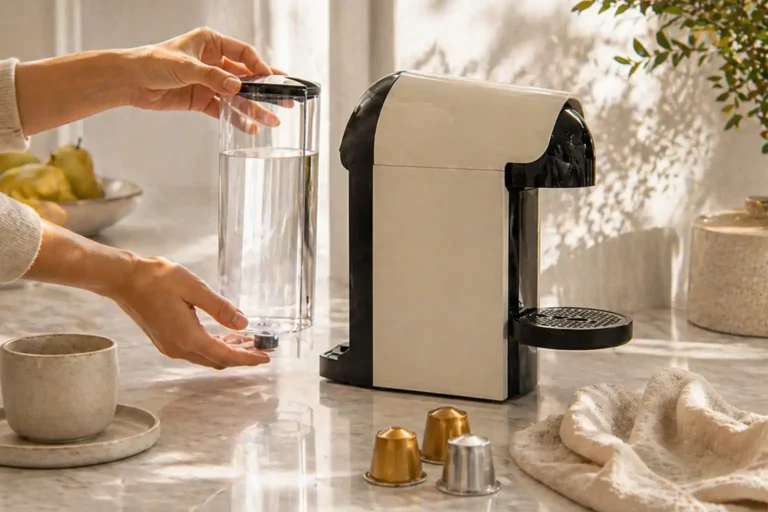
Pod machines sit between drip coffee makers and espresso machines.
They look simple from the outside, but they often rely on pumps, compact water lines, sensors, heating blocks, piercing mechanisms, and narrow outlets. A small amount of scale can affect flow, temperature, capsule pressure, and cup volume.
In practical use, scale often shows up as:
- Shorter or weaker pours
- Slower water flow
- More noise from the pump
- Smaller cup sizes than expected
- Water bypassing the capsule unevenly
- Temperature becoming less consistent
- Warning lights or descale prompts appearing more often
For pod machines, use a purpose-made descaler.
The manufacturer’s recommended descaler is usually the safest choice. Many pod-machine descalers use lactic acid because it works well in compact systems, rinses cleanly, and is easier to control than improvised household mixtures.
Choose a liquid descaler if you want the simplest option. It reduces measuring errors and helps you repeat the same maintenance routine each time.
Avoid:
- Thick household liquids
- Scented cleaners
- Improvised mixtures
- Strong DIY acid blends
- Anything that may leave taste, smell, grit, or residue behind
Pod machines have narrow internal paths, so they do not give you much room for error. The best choice is usually the descaler your machine manufacturer recommends, or a liquid coffee machine descaler that clearly states pod machine suitability.
Why Purpose-made Descalers are Preferred
Purpose-made descalers remove guesswork. That matters more than people realise.
A coffee machine does not need the strongest acid you can find. It needs the right descaling solution at the right concentration, used often enough to stop scale becoming a serious blockage.
Purpose-made descalers help with consistency.
- You do not need to judge vinegar strength
- You do not need to dissolve powder
- You do not need to guess whether the mixture is too weak or too strong
They also reduce odor. That matters because coffee machines hold warm water inside closed parts. Strong smells can linger in reservoirs, tubing, and carafes.
Material compatibility matters too. A proper coffee machine descaler should suit the kind of parts it will touch, including stainless steel, plastic, rubber seals, and sometimes aluminium components.
This is why a citric acid-based liquid format makes sense for regular household maintenance. It gives users a measured option instead of a guessed household mix.
That is the practical advantage: a measured product, a repeatable process, and less room for error.
If you are ready to run the actual descale cycle, follow our step-by-step guide on how to descale a coffee maker
How often Should you use a Coffee Machine Descaler?
There is no single perfect schedule.
Water hardness changes everything. So does machine type, daily use, reservoir size, and how much water passes through the system.
A drip coffee maker used once a day in a soft water area may need descaling far less often than a pod machine used several times a day in a hard water area.
The machine may also tell you. Many pod and espresso machines use a descaling light or maintenance reminder. Treat that as a useful prompt, not something to ignore for months.
As a simple rule, descale more often if you notice slower brewing, weaker flow, lukewarm coffee, excess steam, or taste changes.
Cleaning and descaling are different jobs: cleaning removes coffee oils, stale smells, and residue, while descaling removes mineral build-up inside the water path.. For coffee oils, stale smells, and removable parts, read our guide on how to clean a coffee maker. For timing, read our guide on how often to descale coffee maker
If the issue is coffee oil, stale smells, or dirty removable parts, clean your coffee maker first; if the issue is slow flow, steam, scale, or temperature problems, descale it.
Frequently Asked Questions
Can I use lemon juice instead of descaler?
Lemon juice contains citric acid, but it is not a controlled descaling solution.
It can contain sugars, pulp, oils, and flavour compounds. Those do not belong inside a coffee machine.
Use a proper descaler instead, especially for espresso, pod, and bean-to-cup machines.
Are all descaling solutions safe for espresso machines?
No.
Some descalers suit kettles and drip machines but may not suit espresso machines. Espresso machines contain more sensitive internal parts, including pumps, valves, boilers, thermoblocks, and seals.
Check the machine manual before using any descaler.
Do descaling solutions damage seals or rubber parts?
A suitable descaler should not damage seals when you use it correctly.
Problems usually come from the wrong product, excessive concentration, poor rinsing, or leaving the solution inside the machine too long.
Use the correct dose and follow the machine guidance.
Why do some descalers smell less than vinegar?
Vinegar contains acetic acid, which has a sharp smell.
Citric acid-based descalers usually smell much less. That makes them easier to use in coffee machines because odour can linger in warm internal parts.
A low-odour descaler also makes the rinse stage feel cleaner.
Is powder or liquid descaler better?
Liquid descaler suits most people because it is easier to measure and use.
Powder can work well, but you need to dissolve it fully and measure it correctly. Undissolved grains or a poorly mixed solution can create avoidable problems.
Choose liquid if you want repeatable results with less effort.
How do you use a descaler in a drip coffee maker?
For most drip machines, add the correct dose of descaling solution, fill the reservoir with water as directed, and run the machine without coffee grounds.
Use fresh water, or warm water only if the descaler instructions say it is suitable.
Run a full brewing cycle, then repeat the rinse stage with clean water. After descaling, rinse the coffee maker thoroughly so the next brew tastes clean.
Can I mix my own descaling solution?
You can, but that does not make it the best option.
DIY mixtures depend on accurate measuring, full dissolving, and sensible concentration. Many people make them too weak or too strong.
A ready-made descaling solution gives you more consistency and less room for error.

